Han River Seoul: 5 Easy Walks Along the Hangang
Updated 20 November 2026
Most visitors first see the Han River from a subway window, somewhere between two stations, and think: I should go down there. You should. The Han (한강, Hangang) runs through the middle of Seoul, around a kilometre wide, and the city has turned its banks into eleven riverside parks. They’re free to walk into, and they’re where Seoul goes to rest.
Here are five easy walks by the river that we’d send a friend on. Each takes under half an hour, which leaves time to sit down and watch the water.
1. Mangwon: through the neighbourhood to the river
This is how locals do the Han. From Mangwon Station (Line 6), walk along Mangridan-gil and through the alleys of Mangwon-dong, pick up something to eat at Mangwon Market on the way, and come out at Mangwon Hangang Park on the riverbank. Time it for sunset and stay until the bridges light up.
2. Seonyudo: a garden on an island
Seonyudo is a small island in the river that was a water purification plant from 1978 to 2000. Instead of clearing it away, the city let a garden grow through the old concrete tanks, and opened it as a park in 2002. Walk over the arched footbridge from the south bank, about ten minutes from Seonyudo Station (Line 9), and wander. The park is open from 6 am to midnight, and the river after dark is one of the prettiest night views in the city.

3. Yeouido Saetgang: a wild forest under the towers
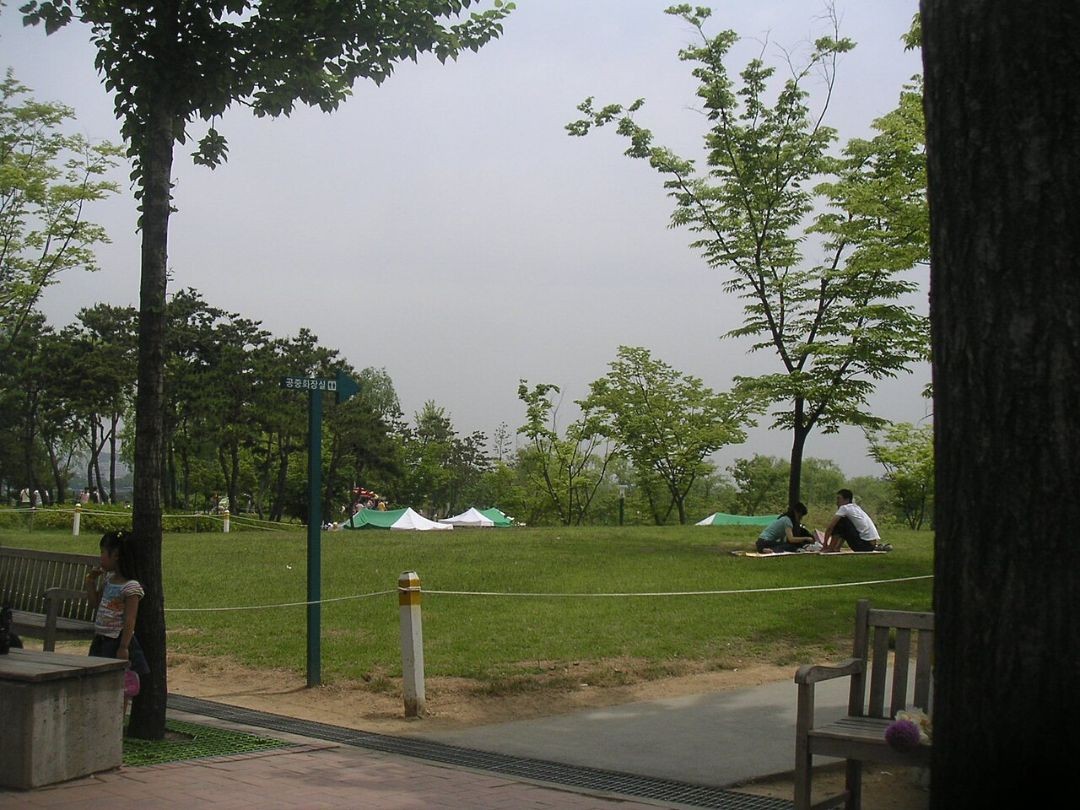
Yeouido is Seoul’s island of banks and broadcasters, and along its south side runs a strip of marsh and forest that most visitors never see. Saetgang became Korea’s first ecological park in 1997, and it’s left rough on purpose: reeds, willows, a dirt trail, and office towers above the treetops. Otters have been spotted here. Saetgang Station (Line 9) is the closest.
4. Ichon: the classic riverside path
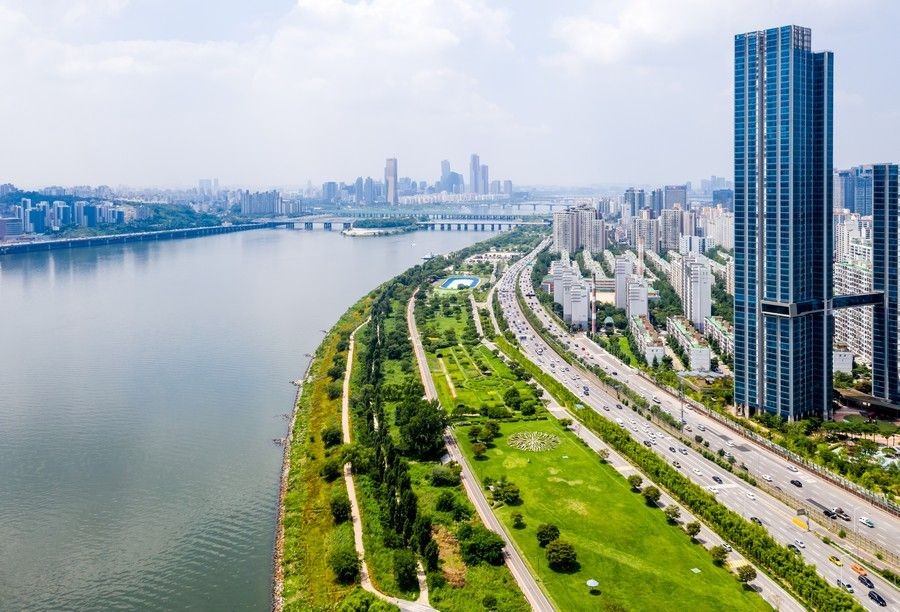
For the plain pleasure of walking beside a wide river, go to Ichon Hangang Park, about ten minutes on foot from Ichon Station (Line 4). The path heads east along the water, with the bridges ahead of you and the south bank across the river, and then you turn round and come back. The National Museum of Korea is at the same station, which makes an easy day of it.
5. Amsa: willows and reeds at the quiet end
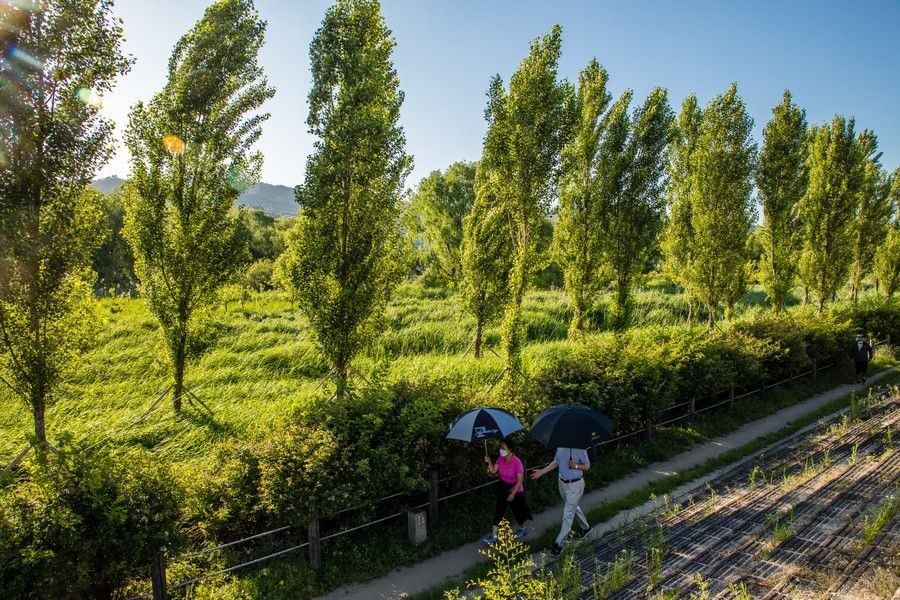
At the eastern edge of the city the river feels different. Amsa Ecological Park is a protected stretch of reeds, silver grass and willows, where the bank has been left to nature. There are no boats on this part of the river, because it’s a protected source of the city’s water. It’s a walk of ten to fifteen minutes from Amsa Station (Line 8). Stay on the trail, and bring binoculars if you like birds.
And the streams that run into it
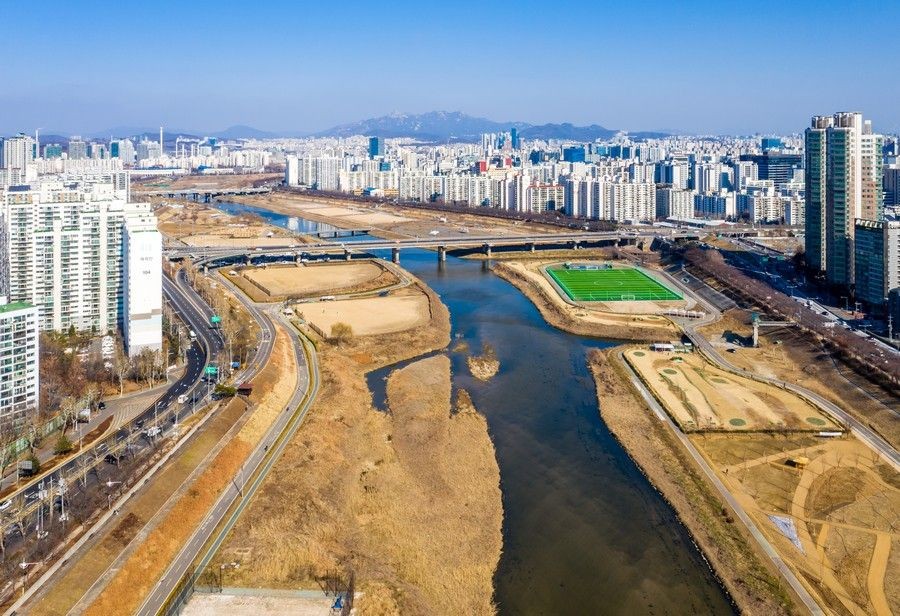
The streams that flow into the Han have paths of their own, through ordinary neighbourhoods where you may be the only visitor. Anyangcheon, in the south-west of the city, is one that locals walk every day. There are more in our riverside and stream walks.
What people actually do at the Han
- Eat ramyeon. Convenience stores in the parks have machines that cook instant noodles for you, and a bowl of ‘Hangang ramyeon’ by the water is a small Seoul ritual.
- Order fried chicken. The bigger parks have marked delivery zones, where riders hand over chicken to people waiting on picnic mats.
- Ride a bike. Seoul’s public bikes, Ttareungi, are parked near many park entrances, and the riverside cycle path runs the length of the city.
- Watch the sunset. In late autumn and winter the sun goes down a little after 5 pm.
A few things we’d tell you first
- The river is windy. In winter it feels colder than the streets, so dress for it and keep the walk short.
- Paths are shared with bicycles in places. Keep to the walking lane, and look both ways before you cross the cycle path.
- After heavy summer rain the riverside parks can flood and close. If the river is high, pick another day.
- The rainbow fountain on Banpo Bridge runs from spring to October, so not in winter.
- Here in December? Seoul in December has the lights and the warmest hours to walk.
See you by the water.
Take these walks with you. Every walk on this page opens in Gogil, our walking app, with the route and its stops on a map you can follow as you go.
Found a walk of your own? You don’t have to live here to add one. Mark the stops on the map, write a line about each, and share it: Gogil is for anyone who loves Korea, whether you are here for a week or for good.
On an iPhone, open gogil.kr in your browser: it works there without installing anything. The app’s menus are in English; the walks’ own text in the app is in Korean.